
 Türkçe








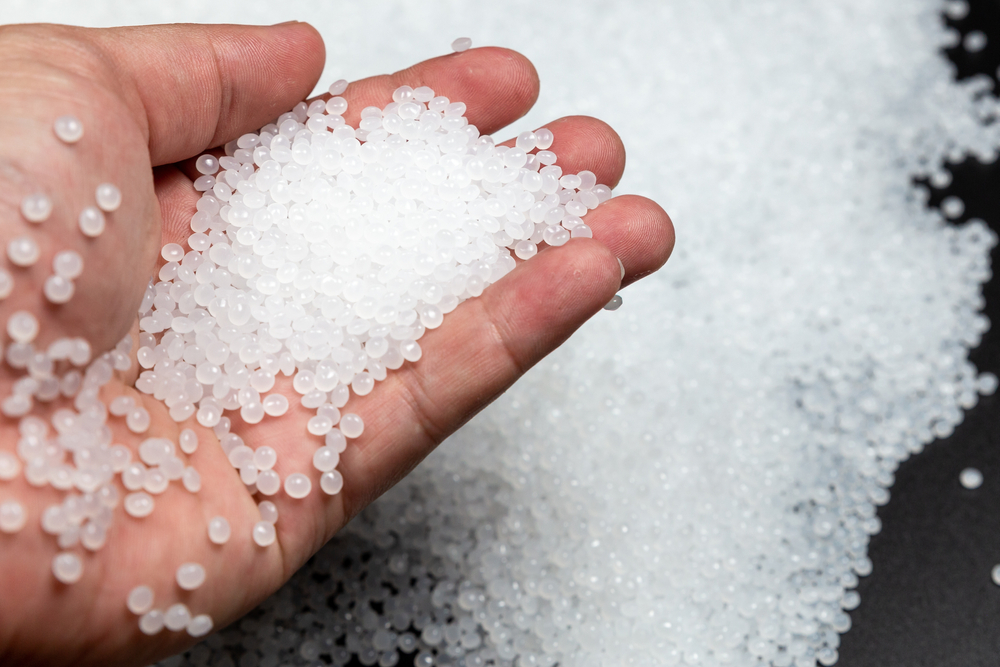
Starting with choosing the right plastic raw material can save you time and money. Impact resistant plastics are widely used in heavy industries such as construction, automotive parts and military applications due to their unique mechanical properties and benefits such as strength and clarity.
To delve deeper into impact resistance, we need to classify plastic types according to toughness.
In this article we will learn more about the durability of plastic materials, as well as the following points:
What is impact power?
How does impact resistance affect your choice of plastic raw materials?
What are the plastics with the highest impact resistance?
1- What are impact resistant plastics?
Impact resistant plastics are a range of high-performance materials that are strong, durable and resistant to breakage and deformation.
Impact resistance should be the main factor in raw material selection. What matters is how resistant your final product can be to cracks. Does your final product have enough energy to withstand without deforming?
First of all, you should know the variables that can affect the impact resistance of the raw material. For example, temperature affects resistance; Plastics gain resistance and durability when exposed to hot temperatures. UV light is also an effective factor as it reduces plastic durability.
2- How does impact resistance affect your choice of plastic raw materials?
You should consider impact resistance as a key factor, especially when manufacturers need to classify raw materials for specific purposes such as PE(Polyethylene) and Polyamides.
When dealing with building structures tensile strength should influence your choice. The reason for this is that these materials used in bridge construction must have high impact resistance against environmental changes.
3- What are the plastics with the highest impact resistance?
If you want to know the best materials with good impact resistance from the 7 types of plastic raw materials, you first need to know the pros, cons and applications of each material. That’s why we’ve collected for you the top 5 materials with high impact resistance:
1- ABS (Acrylonitrile Butadiene Styrene)
The unique properties of ABS make it an excellent material for manufacturers in various fields such as the automotive industry, building and construction. Let’s look at its features:
Lightness is the most important feature of ABS.
It offers resistance to chemicals and heat.
It offers tensile strength and surface hardness.
Pros of ABS
ABS is ideal for use in heavy-duty applications.
It is a cost-effective material.
It has outstanding insulating properties
It has excellent resistance to alkalis and acids.
Since it has a low melting point, you can easily use it in 3D printing and injection molding.
ABS Cons
Since ABS is sensitive to solvents, it can be damaged by certain substances, such as acetone.
ABS is not good for external use.
Its resistance to UV is low, but you can overcome this if you use a UV-resistant coating.
ABS Applications
You can find 6000 grade from ABS as well as you can find ABS in various applications, the following are its best applications:
Electrical applications.
Automotive parts.
Sports equipment.
Household products.
Musical instruments.
2- PC (Polycarbonate) Here is the turn of PC (Polycarbonate), which has a high level of impact resistance. Let’s dig a little deeper into its features:
Polycarbonate has excellent dimensional stability.
When it comes to heat styling, it heats up well.
You can use PC in a wide temperature range, melting point: 155 °C.
It has good electrical properties.
PC Pros
When it comes to transparency, PC is considered the plastic alternative to glass.
In terms of durability, PC is 250 times stronger than glass and 30 times stronger than acrylic.
The PC has excellent electrical properties.
The PC remains robust even at high temperatures.
PC has the advantage of beating glass, which is lighter.
PC Cons
Polycarbonate requires very high temperatures when processing.
PC is a material that is sensitive to scratches
PC can easily expand
PC can be expensive for some manufacturers
PC Applications
Polycarbonate can be widely used in the following applications:
Windows.
protective glasses
Face protective masks.
Architectural glazing to protect the building from damage.
Electric barriers and components.
Machine Guards.